METRONEWS
© New Zealand Broadcasting School 2026

Weaving together the Tongan language story

Carys O'Connor
Ara Pacific group
The Ara Pacific Group at a recent Tongan Language Week event.   Carys O'Connor/NZBS

Growing up Tongan in Aotearoa is an honour, but it does not come without its struggles. 

Ara Institute of Canterbury Engineering student and member of the Ara Pacific group, Simione Nau was reflecting back on his childhood in honour of this Tongan Language Week (Uike Kātoanga'i 'o e Lea Faka-Tonga).

For many first-generation New Zealand-born Tongans, sacrifices were made by their parents to provide better opportunities for their children. 

This meant leaving their home islands behind and learning to adapt to a new way of living, one much different from what they knew growing up.

“Growing up, we are often exposed to the "Anga Faka Tonga" (The Tongan way), whether it's through church, community gatherings or even celebrations,” Nau said. 

"Having no real experience in the “Tongan way,” our parents are the only connection we have to our roots.” 

This is why Tongan Language Week is significant, as it’s a chance to bring communities together and celebrate the values and what it means to be Tongan.

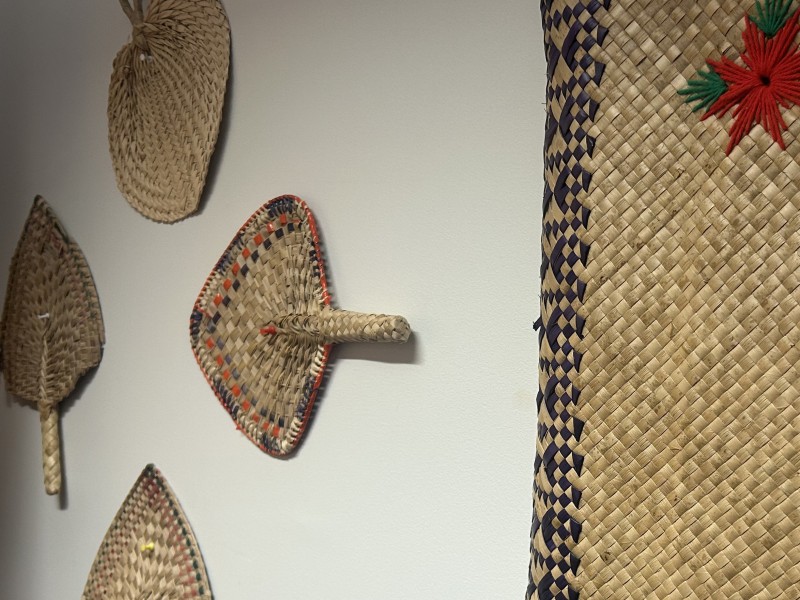
traditional Togan hand fan (i)
Tongan hand fan (I) and woven mat at the Ara Institute of Canterbury, is a traditional cultural practice passed down by ancestors, that is practical and holds significant symbolic value. Carys O'Connor/NZBS

The official theme of Tongan Language Week for 2026, "Ko 'etau hiva, ko e fe'unu mahu'inga ia ki he mo'ui 'a e Tonga," translates to "Our music is a vital strand of our Tongan culture.” 

The theme highlights Hiva (music and song) as the heart of Tongan culture and communication, and how connections can be formed in Aotearoa and globally through shared expression.

"Ko 'etau hiva, ko e fe'unu mahu'inga ia ki he mo'ui 'a e Tonga,"  focuses on how melodies and lyrics pass down history, values, and language to younger generations.

Nau highlighted the importance of the Tongan language connecting him to his heritage and identity, despite the challenges he faced growing up.

As a first-generation New Zealand-born Tongan, he felt like he didn't belong among the wider community, feeling the need to put a cover on his Tongan identity in fear of being judged for his background. 

“As time went on, I began to realise that I was privileged with the ability to fluently speak my mother tongue, something that many individuals from different backgrounds wished they could do,”  Nau said. 

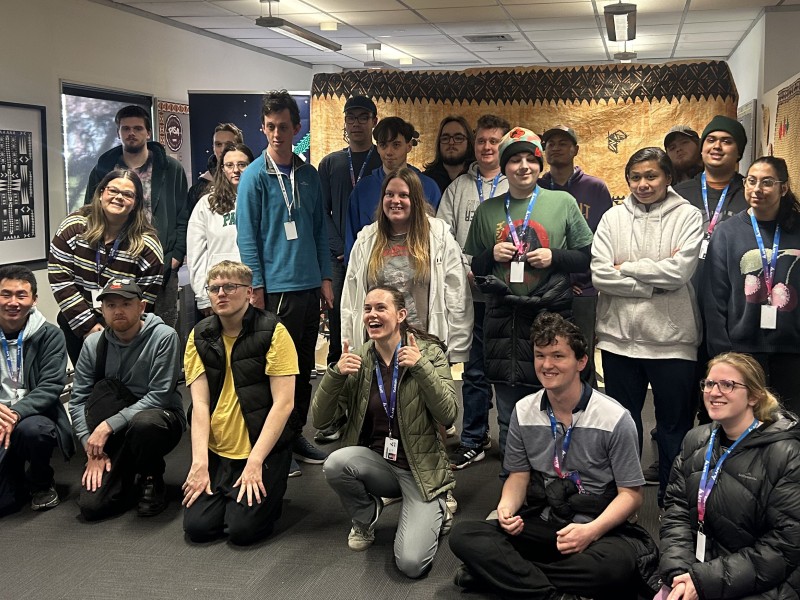
Ara students at Tongan Language Week
Ara students celebrating Tongan Language Week event at Ara Institute of Canterbury. Carys O'Connor/NZBS

“For some Tongans, they are fortunate with the ability to speak the language of our ancestors. However, for others that ability is far beyond their reach. To be able to celebrate the Tongan language for one week once a year, provides an opportunity for those to be able to learn more about the Tongan Language.”

He emphasised the importance of keeping the language alive, so the important history and culture behind it is not forgotten. 

“We know that as the generations continue to grow, so does the fear that we may lose our language. So it is important that we integrate it into our schools, as a lot of our students coming up are of Tongan descent and they did not really grow up with that knowledge, and for us to be able to share that knowledge with them means a lot."

Nau says it is integral for New Zealand students to learn more about the Tongan language to preserve the culture for future generations to come.